

For two New Orleans designers at SCAD, fashion became a way to carry home into the world
Before the runway, before the fittings, before fabric moved under the lights at SCAD FASHION 2026, the work of Maddy Osborne and Owen West Gibson began somewhere else. It began in New Orleans.
For Osborne, home shows up in the softness of a living room after something hard has happened—in family stories passed around the room. In the phrase she grew up hearing, “making do with what ya got.” In the black and gold of the New Orleans Saints as part of the way a family gathers, copes, and keeps going.
Her senior thesis collection, Cushion for the Fall, looks at post-trauma expression after Hurricane Katrina and the environmental racism surrounding the storm. Osborne chose to focus less on the event itself and more on what came after, especially the endurance of New Orleans and the private rooms where people held each other together. Classic shirting details and familiar household objects became garments that call up a grandmother’s house: the old fabric, the chair everyone has sat in, and the feeling of being somewhere that remembers you.

She pushed the materials further. Solstiss lace was buried beneath soil in a Georgia bog, letting the earth stain it into golds and browns. Organza was dyed with coffee to suggest the marks left by floodwater. It carries weather, family, damage, humor, memory, and the stubborn beauty of a city that has learned to rebuild without becoming easy to summarize.

Maddy Osborne

Owen West Gibson
Gibson’s collection, Foundations, begins with protection. His thesis studies the history, construction, and function of outerwear, then reimagines five classic silhouettes through a modern lens. Jackets, coats, and protective garments became a way to think about what we wear when we move through the world and what we need from clothing beyond appearance. Around those structured pieces, he developed dresses, trousers, and undergarments through a more intuitive draping process, giving the collection a conversation between discipline and instinct.
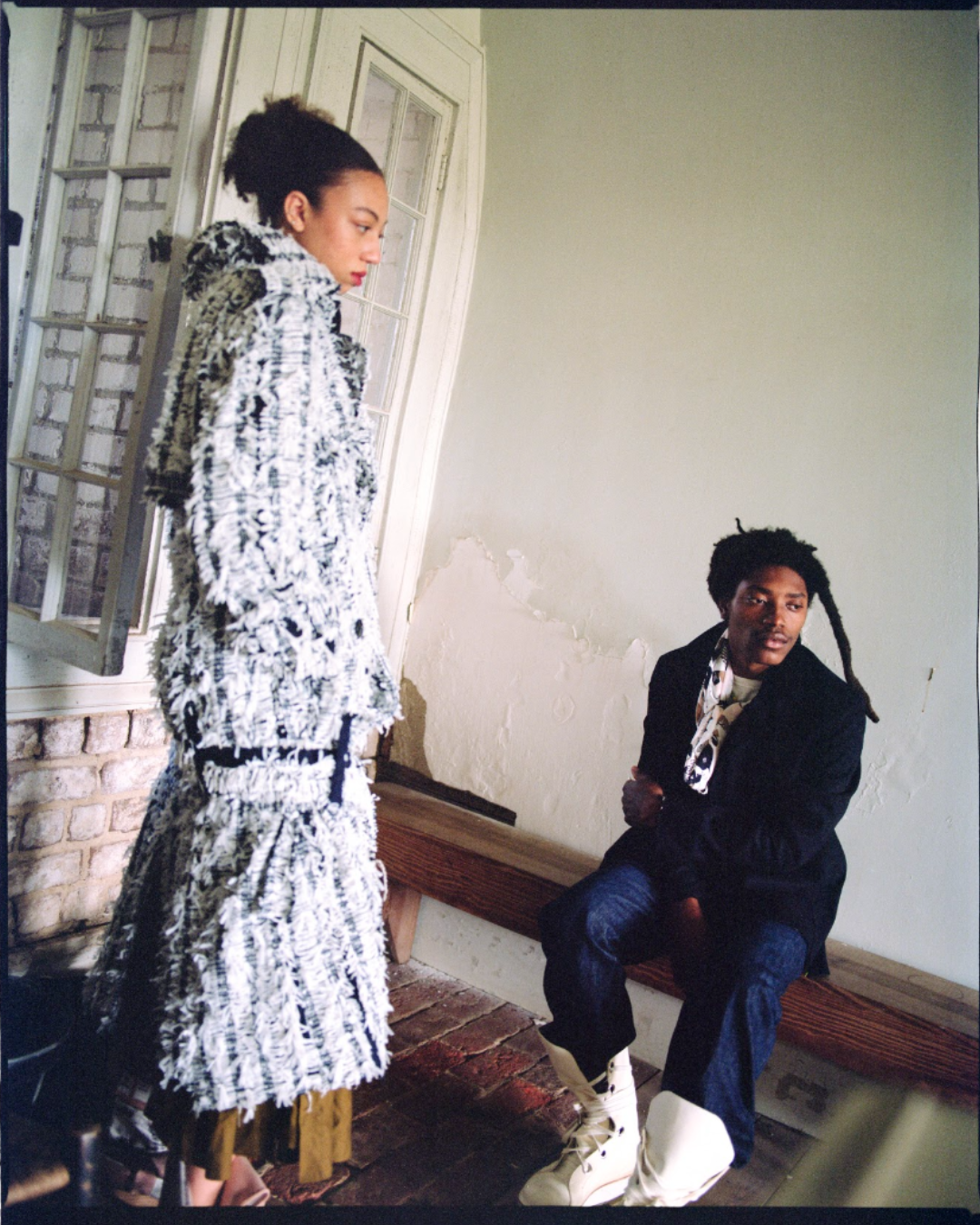
New Orleans enters his work through material. Every fabric and textile in Foundations came from a deadstock fabric supplier in the city, grounding the collection in responsible sourcing and the particular character of reclaimed textiles. The choice gives the garments a story before they ever reach the runway. Someone had handled that fabric before—it had waited somewhere in New Orleans before Gibson cut it, shaped it, and sent it into a different life.
Together, the two collections form a small Southern map: New Orleans as origin, Savannah and Atlanta as training ground, the runway as the next point forward.At SCAD, that path feels natural.
The university’s presence is part of each city’s creative drumbeat, showing up in museum exhibitions, student work in storefronts, studio conversations, fashion events, and the people moving between all of it with garment bags, sketchbooks, and coffee.
By the time Osborne and Gibson’s collections reached SCAD FASHION 2026, their ideas had already been impacted by more than one place. That may be the most compelling part of their work. Home does not appear as a reference pinned to a board or a sentimental detail added at the end. It is in the soil-stained lace, the coffee-dyed organza, the deadstock fabric, the structured outerwear, the familiar shapes pulled apart and made new.
A place can stay with a person that way.
