
Words by Daria Smith
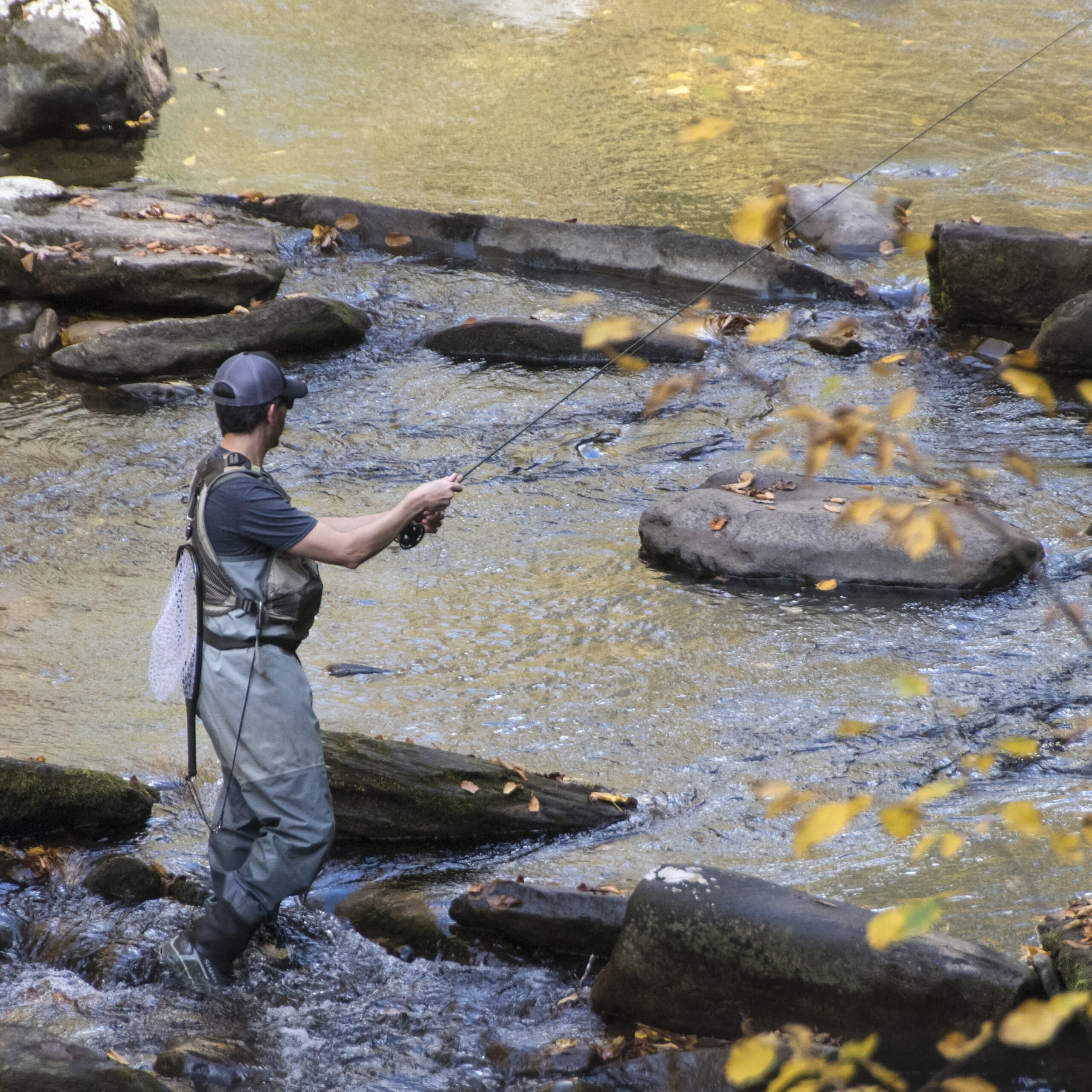
Dawn comes soft on the Tuckasegee, a pale wash of light easing over hemlock and rhododendron. Mist lifts in ribbons. A great blue heron ghosts the far bank. In the hush between first cast and first rise, you can hear it: the quiet, metronomic rhythm that turns water into music. Loop, lay down, drift.
The voice of Eugene Shuler, the lead guide of Fly Fishing the Smokies and the youngest person ever inducted into the Southern Trout Legends of the Fly Hall of Fame, carries across the current. “Every day is sharing an experience with somebody,” he says. “That first fish, there’s nothing like that. It’s a magical, cool moment.” He lifts the line again, the arc catching the new light like fine wire.
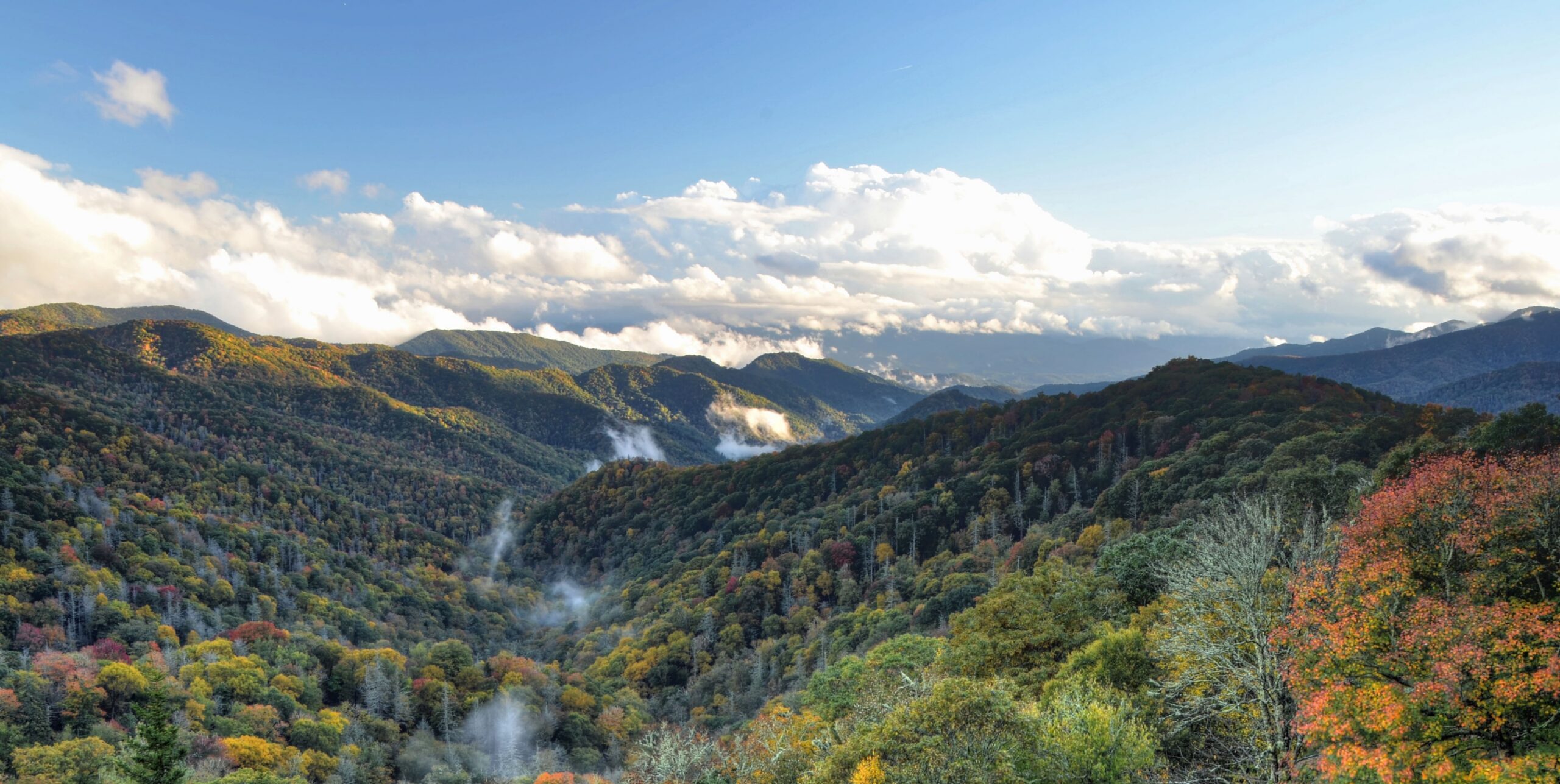
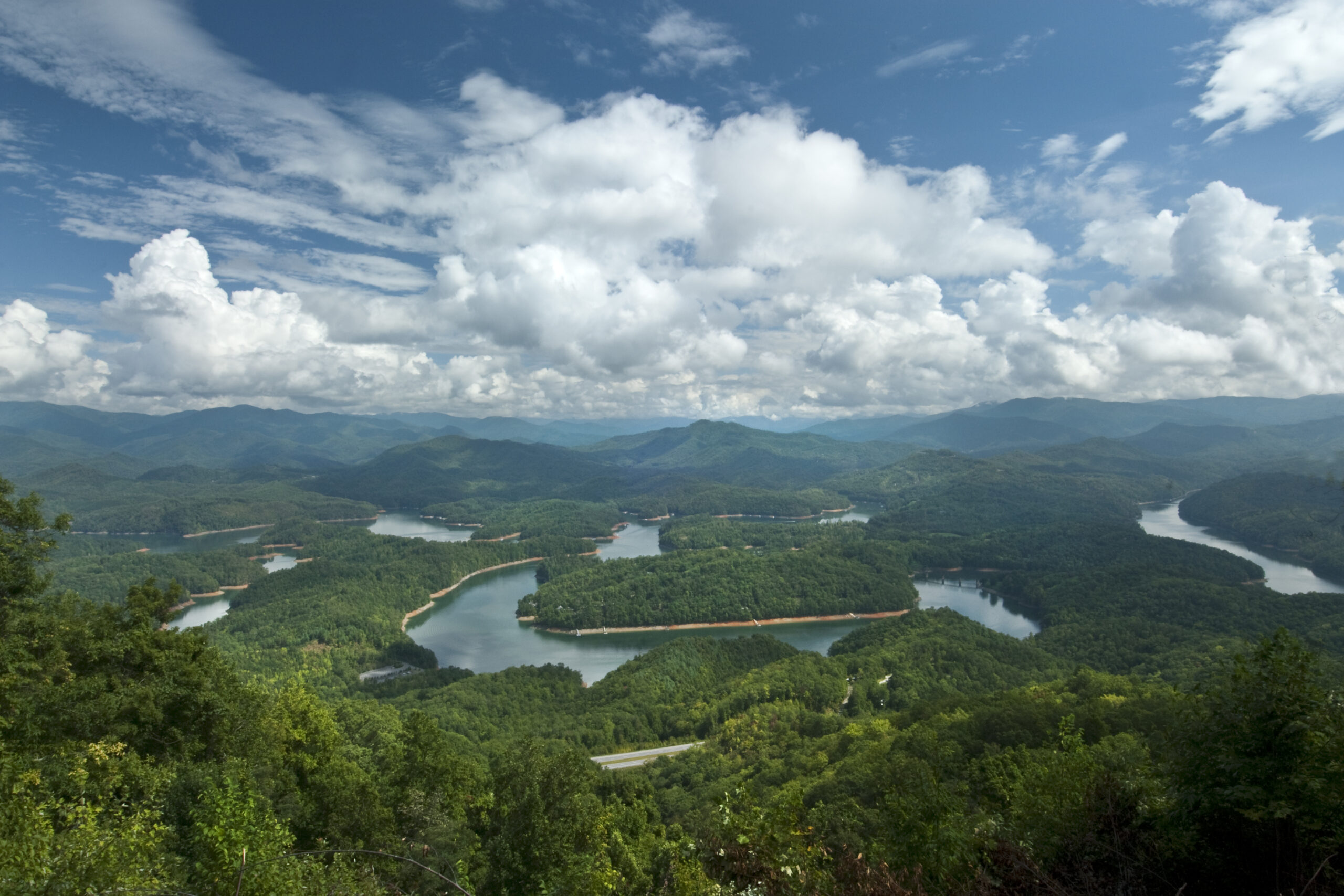
Bryson City, North Carolina, sits cradled by the Smokies, a Mountain Heritage Trout Water City stitched together by cold creeks and the broad, green reach of the Tuckasegee River. The range holds the rare distinction of being both a temperate rainforest and a UNESCO Biosphere Reserve, its mist-draped folds teeming with more than 17,000 known plant and animal species. Nearly 3,000 miles of freestone streams tumble out of the Great Smoky Mountains National Park. Tailwaters pour clear and cold from Fontana Lake, the deepest lake in North Carolina. In town, a 2-mile stretch on the Tuckasegee becomes a seasonal classroom during the period of Delayed Harvest where ethics and excitement run side by side. From Oct. 1 through the first Sunday in June, anglers can only use single-hook, artificial lures and must release all fish they catch, although this practice is more a covenant than a rule—a promise from one generation to the next.
Shuler’s grandfather returned from World War II and began guiding in 1946. “A lot of those guys looked like they stepped off of a Filson ad,” Shuler says, laughing. He remembers the ritual of loading gear, the pat on the head before the Jeep disappeared up a gravel road, and the rare days when he tagged along and watched. “I saw how he treated people, his warmth, and I wanted to carry that over.”
Shuler’s father added a different cadence, a walking history book who folded lessons about place into every mile. “Growing up in a small community, with a huge family, you don’t want to tarnish their name,” Shuler says. “You want to live up to it.”
On the Tuckasegee and its sister streams, conservation is not an idea you admire from a distance; it is something you do with your hands. The Delayed Harvest trout management program’s heavy seasonal stock, strict catch-and-release windows, and rules on single-hook artificial lures give newcomers a forgiving classroom and veterans a technical playground. Shuler does the math. “People still want to keep fish,” he says. “There’s only so many in a stretch of stream before it starts to matter.”
The arithmetic of restraint becomes its own kind of abundance. Fish live long enough to spawn, to grow, and to teach. The same trout appears in three cameras over two weeks, becoming a living lesson for a father and child on a Saturday afternoon. “We’ve named the fish,” Shuler admits. “We’ve caught some fish six or seven times. It’s cool to show people, ‘We caught this one before.’ And it lives on.”
Guides like Shuler sit at the point of that spear, teachers of ethics as much as of distance and drift. “You are the forefront of conservation,” he says. “There’s a way to do it that’s soft. You don’t want to be polarizing. The reason we have all this is because we take care of it. We turn these back.” Lessons come in the form of stories, not lectures. A stream’s history is woven into a casting stroke. A note about spawning size is added as you pinch a barb. A photograph, proof that a child’s fish last week is the same fish in a different set of hands today.
The river itself tells a story of return. As a boy, Shuler snuck down to the Tuckasegee River in town and fished until his mother hauled him home. “I discovered there were trout down there when I was 10 years old,” he says. Clean water work took hold. Possibility followed. Shuler grew up on photos of the Madison River and the Big Hole in Montana, drift boats riding high in western light, and wondered why that couldn’t be the Tuckasegee. He made it happen with curiosity and a VHS tape.
That first fish there’s nothing like that. It’s a magical, cool moment.
“Hyde Drift Boats had a VHS on how to row a drift boat,” Shuler says. “I learned to row using that tape. Then I went to the lake to practice. After that, I took it to the river.” Today, his front yard often resembles a dry dock, a fleet for every mood of water. A hand-built McKenzie drifter hangs from the ceiling of his shop, patterned on vintage plans with measurements that read like folklore, “fifteen and seven-eighths”, or thereabouts.
For Shuler, the work still points outward. “To be a good guide, you’ve got to want your client to catch fish more than you do,” he says. “If I never catch another fish in my life, I’ve caught my share.” Shuler has more guided trips under his belt than any other guide in the region, logging more than 340 days a year on the water and, through the years, catching 99 species on a fly rod in global waters. Beginners learn to cast and, more importantly, to see, to read water, to time a strike, to feel that small translation of current, line, and living thing.
“I show people what they need to do to be successful in that moment,” Shuler says. “If I overload you with junk at first, you’ll never retain it.” For veterans, the Smokies still have a way of humbling you. “The wild stuff in the National Park, that challenges anybody.”
Across town, the Fly Fishing Museum of the Southern Appalachians holds the sport’s memory, founded by Alen Baker of the Rocky River Trout Unlimited Chapter. Bamboo with river miles in its cane, reels whose clicks sound like time ticking away, flies tied with hair, feathers, and a little magic. The museum resides beside the Appalachian Rivers Aquarium. Inside, the exhibits read like a ledger of characters, stream blazers, flytiers, rod makers, guides, conservationists, and cartographers, boasting the first commercial McKenzie-style drift boat in the South. Children press noses to the glass. Old men lean in. A town keeps its story.
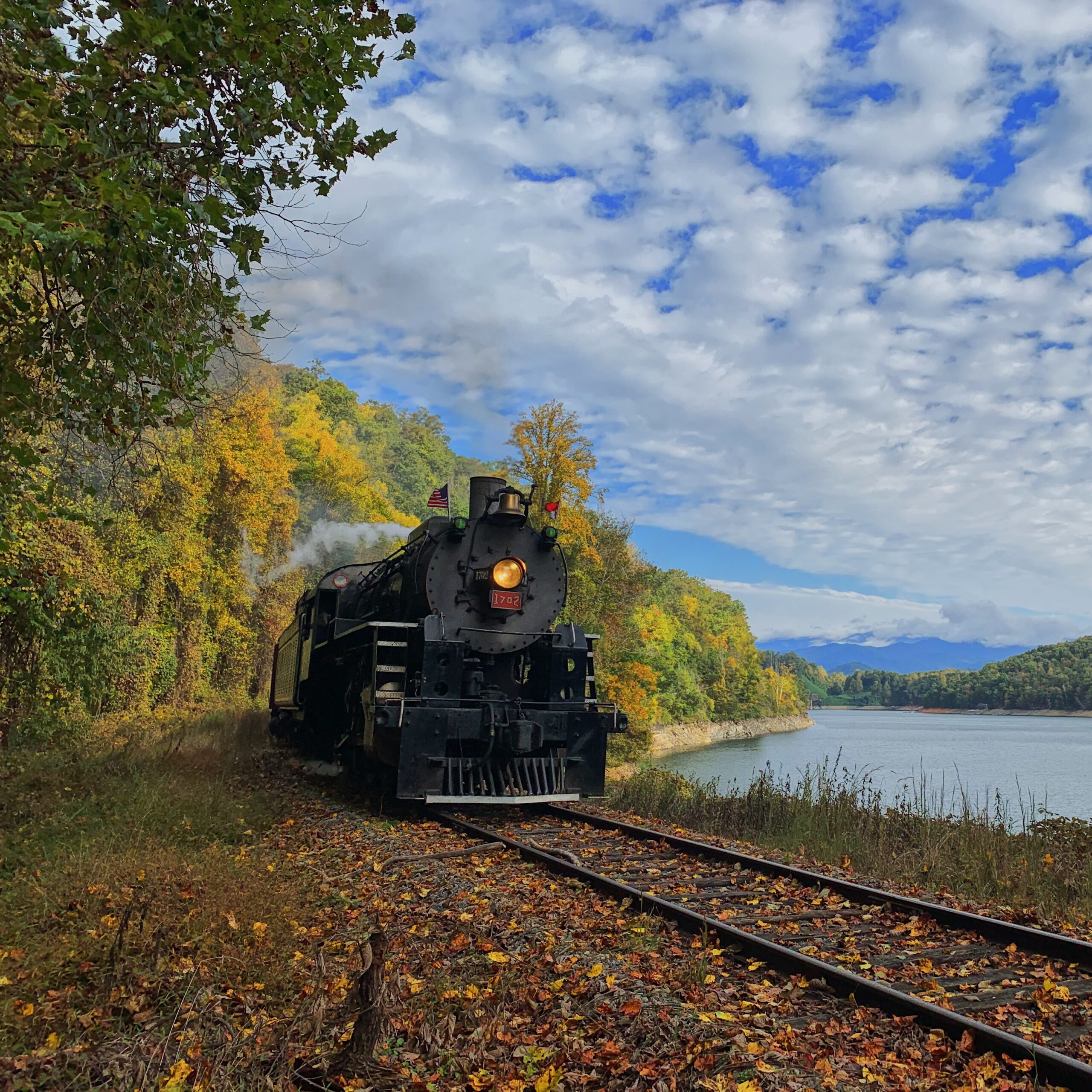
Bryson City is unique because the land demands it. Over 80% of Swain County remains wild and protected, held by the Great Smoky Mountains National Park, Nantahala National Forest, or the Eastern Band of Cherokee Indians, a trust written in trees and water. It ranks among the nation’s counties with the highest percentage of public land. Hollers stack creeks like cordwood. Out West, you drive an hour to change streams. Here, you just round a bend.
The bench runs deep. The oldest commercial flytier in the Southeast, James Conner, lives across from Shuler. Jim Estes, “like Yoda of fly-fishing,” still reads Deep Creek like Braille. Writers drift through. Patterns born here carry names that still ring. All of it feeds a culture that has become an economy. Anglers in waders at the diner. Drift boats in the post office lot. Shoulder seasons that fill. The Delayed Harvest calendar helps, as the state stocks the river with rainbow and brown trout in October and November and November, March through May, the months when the light turns gentle and the dogwoods bloom.
The ethic reaches beyond trout. Shuler lights up when he talks about the Southern Appalachian brook trout—the “speckled trout” of local speech—a native strain once reduced to a handful of miles by logging scars and introduced fish. The species is now recovering, as biologists and volunteers stitch its habitat back together. Shuler argues for wider adoption of catch-and-release policies, thoughtful limits on fishing in tailwaters like the Nantahala, and more Delayed Harvest-designated streams where it makes sense.
He laughs when he remembers the year the Madison River in Montana skunked him and then the way his wife handed him a birthday card that read, “Pack your bags. You’re going to Montana to fly fish the Madison,” two tickets tucked inside for him and his son. Even a man who rows most days of the year still learns when he listens. The lesson holds at home: Patience. Observation. Looking before you act. “You’ll find beauty everywhere if you just look for it,” he says. “Fly-fishing’s not something you can rush.”
By dusk, the Tuckasegee changes its tone. Swallows stitch the sky. The river glows from within, green gold and breathing. Shuler false casts once, twice, then lets it ride and watches the fly settle into a seam. He does not hurry. He does not need to. What’s here extends beyond sport, it’s craft and culture, a living archive and an open door. Bryson City wears its title, fly-fishing capital of the South, with the quiet confidence of a town that knows it did not invent this. It inherited it, then chose to keep it alive. On this water, tradition is not a museum piece; it is motion. A loop rising. A trout turning. A guide’s hand, gentle as prayer, easing a fish back into the current. Shuler still hears his father and grandfather, their voices carried in the drift:
“Turn him back. Catch him another day.”
5 More Spots to Cast a Line Below the Mason-Dixon
South Holston River, Tennessee
Below the Weir Dam near Bristol, this tailwater turns into a trout factory. Cold, consistent releases from South Holston Lake feed one of the densest wild brown trout populations in the country, and prolific sulfur hatches paint the air gold each spring. Anglers wade or drift these 14 miles of river with 4- to 6-weight rods, fine 6X tippet, and steady nerves, because the trout here demand precision.
Chattahoochee River, Georgia
Threading through the heart of Atlanta, the ’Hooch proves a trout stream can thrive in a city’s backyard. Below Buford Dam, year-round cold releases keep rainbow and brown trout active even under the skyline. Shoals and deep runs hide wild fish, and a 9-foot, 5-weight rod with nymphs or streamers will do the trick. Early morning fog, herons on the wing, and the low hum of the interstate make for an oddly serene soundtrack to a cast.
Florida Keys, Florida
Where the Gulf meets the Atlantic, the Florida Keys stretch like a necklace of coral and current, a place where fly anglers chase silver ghosts across turquoise flats. Bonefish tail in ankle-deep water, tarpon roll under bridges, and permit test your patience and your 10-weight. From Islamorada to Key West, the sight casting is as technical as any trout stream. Only here, your quarry might rip 100 feet of line in seconds. The challenge is as pure as the water: see the fish, make the shot, hold your breath.
Charleston, South Carolina
In the Lowcountry’s salt marsh maze, fly-fishing feels like choreography: Cast, strip, pause. Redfish tail in flooded spartina during summer “flood tides,” their copper backs flashing in the golden light. Around Shem Creek, the Wando, and the Cooper River, guides whisper about timing the tide and keeping the line tight on an 8-weight. The best casts land crab patterns softly as a sigh. History rises from the water here, church steeples on the horizon, while the tide keeps its own rhythm.
Mobile Bay, Alabama
At the meeting of five rivers and the Gulf, Mobile Bay is a living delta, warm, brackish, and full of life. Speckled trout, flounder, and redfish weave through bayou channels and grass-fringed flats, feeding where fresh water meets salt. A 7- or 8-weight rod, intermediate line, and a shrimp or Clouser pattern will get you started. Locals drift beneath live oaks and shrimp boats, casting toward oyster bars that hum with promise, where the next tug might come from anything with fins and fight.
